
Hex Chess
Chess, one ring wider.
Scroll sideways for the rest →
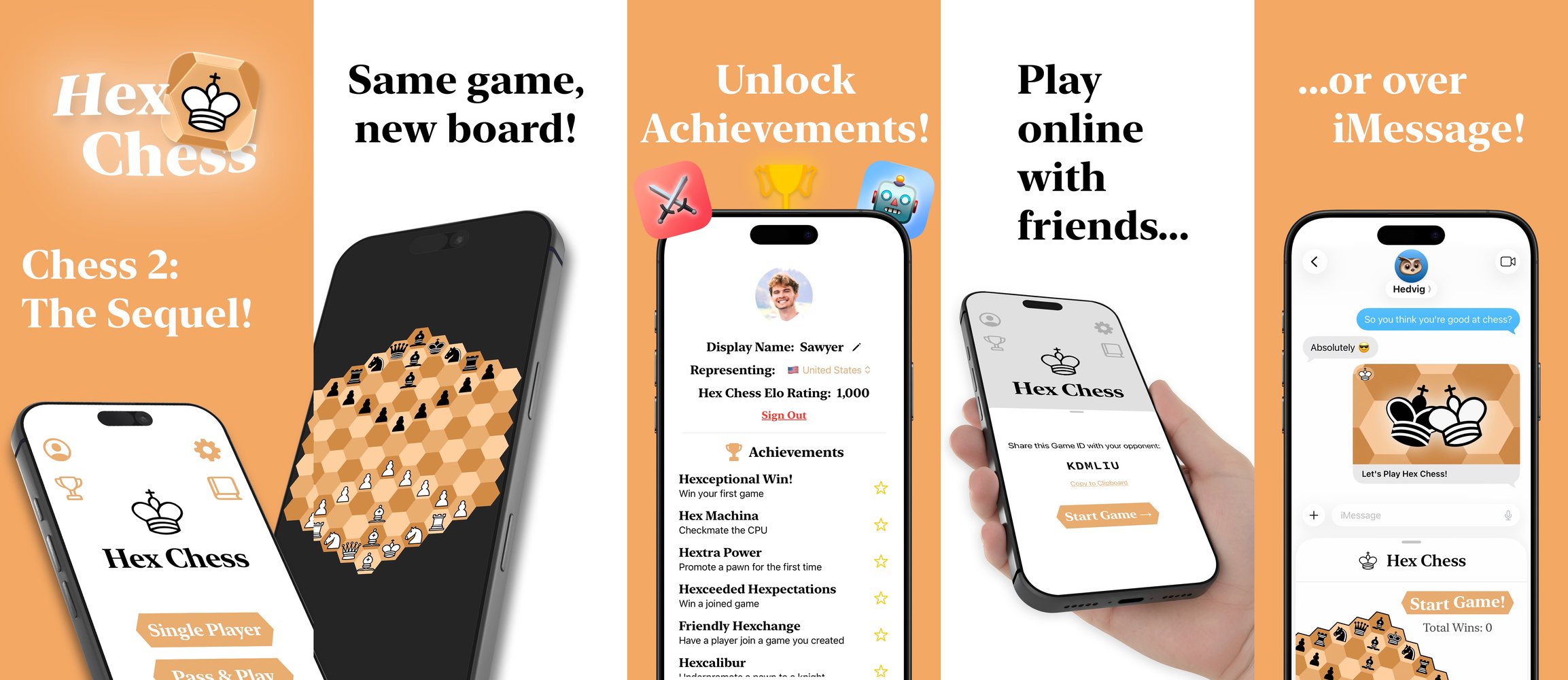
Hexagonal chess was invented in 1936 by the Polish engineer Władysław Gliński. It keeps every piece you already know and puts them on a board of 91 hexagons, where a bishop has three colours to work with, a pawn captures diagonally into a different geometry, and none of your memorized openings survive contact.
Hex Chess is as easy to learn as ordinary chess and levels the board between a grandmaster and a beginner, because on ninety-one hexes nobody has twenty years of pattern recognition to fall back on.
-
Play the computer
A CPU opponent for practice, on a board where the usual heuristics do not transfer. Good for learning how the pieces behave before challenging a friend.
-
Pass and play
Hand the device back and forth for a game across one table — no account, no connection, no setup. Perfect for road trips.
-
Ranked online matches
Send a friend a game code and play over the network, with an Elo rating and a global leaderboard tracking where you land.
-
Game Center achievements
Achievements and progress tracked through Apple’s Game Center, viewable from the main menu.
-
Live Activities
An active game can surface on the Lock Screen and in the Dynamic Island, so you know when it is your move without opening the app.
-
Twenty-five languages
Hex Chess ships localized in twenty-five languages so you can play opponents from around the world.
Details
- Platforms
- iPhone and iPad, iOS 17.0 or later
- Price
- Free
- Category
- Board · Strategy
- Languages
- 25
- Accounts
- Optional — sign in with Apple, Google, or email only if you want online play, achievements, and the leaderboard
Privacy
Playing offline against the CPU or passing the device around collects nothing at all. If you sign in for online play, a display name and avatar are stored so opponents can see who they are playing; your email is used for authentication and never shown to anyone. Read the full privacy policy.